Imagine you have a special recipe for making a giant batch of lemonade. You know exactly which ingredients you need and how much of each ingredient to use. But there is one problem: you only have a tiny pitcher, and you need enough lemonade for an entire school.
What do you do?
You find someone who has a much bigger kitchen, larger mixing containers, and the right equipment to make all that lemonade for you.
That is basically how bulk chemical tolling works.
Instead of lemonade, companies make special chemicals used in factories, machines, and manufacturing processes. When they need large amounts of these chemicals, they hire another company with the equipment and experience to make them.
Let’s explore how this works, why companies use it, and how it helps factories keep running.
What Is Bulk Chemical Tolling?
Bulk chemical tolling is when one company hires another company to manufacture large quantities of chemicals using an established formula or production instructions.
Think about making cookies.
You have a cookie recipe that everyone loves, but your kitchen oven can only bake 12 cookies at a time. What happens when someone orders 10,000 cookies?
You find a bakery with enormous ovens, professional mixers, and people who know how to bake thousands of cookies.
You provide the recipe, and the bakery handles the manufacturing.
Bulk chemical tolling works in a similar way. A company that needs chemicals partners with a chemical manufacturer that has the equipment, trained workers, and production capabilities to make larger batches.
The company purchasing the service receives the finished chemicals without needing to build and operate its own large manufacturing facility.
Why Do Companies Need So Many Chemicals?
Look around your house. Almost everything you see was made using machines, materials, and manufacturing processes.
Cars, bicycles, refrigerators, toys, and even the metal parts inside your furniture all come from factories.
Many factories depend on specialized chemicals to help their equipment and production processes work correctly.
For example:
- Lubricants help moving metal parts slide against each other with less friction.
- Industrial cleaners help remove oil, grease, and dirt from equipment and manufactured parts.
- Metalworking fluids help control heat and friction when machines cut or shape metal.
- Corrosion inhibitors help protect certain metal surfaces from rust and corrosion.
- Specialty fluids support specific manufacturing operations that require carefully controlled chemical properties.
A factory can use a significant amount of these materials during normal production.
When hundreds or thousands of gallons are needed, making chemicals in tiny batches becomes impractical.
Bulk chemical tolling provides a way to manufacture larger quantities while maintaining the required formulation and production controls.
How Does Bulk Chemical Tolling Work?
Let’s pretend we are making a special type of paint for a toy factory.
The factory knows what kind of paint it needs, but it cannot manufacture enough to paint thousands of toys.
Here is how bulk chemical tolling works.
Step 1: The Company Provides the Recipe
First, the company provides the chemical manufacturer with its formula and production requirements.
Just like baking cookies, chemical manufacturing depends on using the correct ingredients in the correct amounts.
The manufacturer reviews the formula, required materials, equipment, and production specifications before accepting the work.
Step 2: The Manufacturer Prepares the Equipment
Next, the chemical manufacturer gets its production equipment ready.
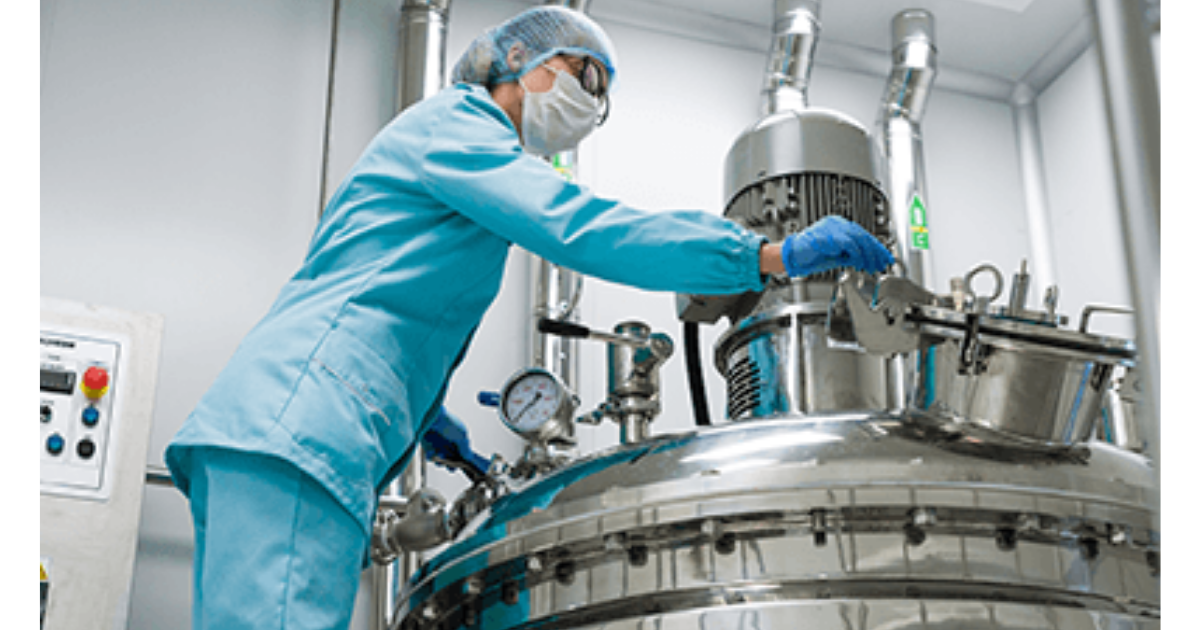
Instead of kitchen bowls and wooden spoons, chemical manufacturers use specialized tanks, pumps, mixers, and other industrial equipment.
These machines are designed to handle the materials and quantities required for the manufacturing process.
Step 3: The Chemicals Are Manufactured
Now it is time to make the product.
Trained professionals follow the approved manufacturing instructions, combining and processing materials using the required equipment.
Some chemical products are relatively straightforward to blend. Others require more specialized production processes and controls.
The goal is to manufacture a finished product that meets the customer’s specifications.
Step 4: The Finished Chemicals Are Checked
Before the chemicals are released, the manufacturer performs the quality checks required for that product.
Think about a bakery checking that its cookies are the correct size and properly baked.
Chemical manufacturers check relevant product characteristics to confirm that the finished batch meets its established requirements.
These checks are important because factories need chemicals that perform consistently.
Step 5: The Chemicals Are Packaged and Delivered
Once the product meets the required specifications, it is packaged according to the customer’s needs and the applicable handling requirements.
Depending on the chemical and production arrangement, packaging can include drums, totes, or other suitable bulk containers.
The finished chemicals are then delivered or transferred according to the agreement between the companies.
The customer receives the chemicals it needs without manufacturing the entire batch itself.
Why Is Bulk Chemical Tolling Important?
Imagine a toy factory that makes 1,000 toy cars every day.
The machines that manufacture those cars need special lubricants to help their moving parts operate correctly.
Now imagine the factory suddenly receives an order for 10,000 toy cars.
The factory needs more materials, more production time, and potentially more lubricant.
If the company manufacturing that lubricant cannot keep up, the toy factory could experience delays.
Bulk chemical tolling helps companies access additional manufacturing capacity.
Here are some of the biggest benefits.
Companies Can Make Larger Quantities
A small kitchen cannot prepare enough food for an entire city.
Similarly, a company with limited chemical manufacturing equipment cannot always produce the quantities required by growing customers.
Bulk chemical tolling allows businesses to use another manufacturer’s production capacity.
Companies Do Not Need to Buy Every Machine
Industrial chemical manufacturing equipment requires significant investment.
Companies also need trained employees, appropriate facilities, maintenance programs, and safety procedures.
Working with a toll manufacturer allows a business to purchase manufacturing services rather than building all that infrastructure itself.
Production Can Become More Consistent
Imagine buying your favorite ice cream and discovering that it tastes completely different every time.
That would be frustrating.
Manufacturing companies face a similar problem when the chemicals they purchase vary between batches.
A properly managed toll manufacturing process uses documented production instructions and quality controls to support batch-to-batch consistency.
Consistency matters because changes in chemical properties can affect equipment, finished products, and production processes.
Businesses Can Focus on What They Do Best
A company that designs and sells industrial lubricants does not necessarily need to operate its own chemical manufacturing facility.
It can focus on product development, customer relationships, and distribution while a qualified toll manufacturer handles production.
This arrangement allows each company to concentrate on its primary responsibilities.
What Is the Difference Between Chemical Tolling and Chemical Blending?
Chemical tolling and chemical blending are closely related, but they do not mean exactly the same thing.
Think about a bakery again.
Chemical blending is like mixing flour, sugar, butter, and other ingredients to make cookie dough.
Chemical tolling is like hiring a bakery to manufacture cookies for your business using your recipe.
Blending describes a manufacturing process. Tolling describes a business arrangement in which one company manufactures a product for another.
A toll manufacturing project can involve chemical blending, but some projects require additional manufacturing processes.
| Chemical blending | Bulk chemical tolling |
| Describes combining chemical ingredients | Describes manufacturing chemicals for another company |
| Can be performed in small or large batches | Commonly involves contracted production quantities |
| Focuses on the mixing process | Includes manufacturing responsibilities defined by the agreement |
| Can be part of toll manufacturing | Can include blending and other processing steps |
Understanding this difference helps companies choose the appropriate manufacturing service.
What Types of Businesses Use Bulk Chemical Tolling?
Many industries depend on specialized chemicals to manufacture products and maintain equipment.
For example, an automotive parts manufacturer uses metalworking fluids during machining operations. A metal fabrication business uses lubricants when bending, stamping, or forming metal. Industrial maintenance operations use cleaners and specialty chemicals to maintain equipment.
Chemical tolling also supports companies that develop and sell chemical products under their own brands.
These businesses have different manufacturing requirements, but they share an important need: access to reliable chemical production capacity.
The specific manufacturing arrangement depends on the chemical formulation, production volume, equipment requirements, and quality standards.
How Do Companies Choose a Bulk Chemical Tolling Partner?
Let’s return to our lemonade example.
If you needed someone to make 1,000 gallons of lemonade, you would want to know whether they had enough equipment, understood your recipe, and could deliver the finished lemonade correctly.
Choosing a chemical tolling manufacturer involves similar questions, although the technical requirements are much more demanding.
Companies should evaluate a manufacturer’s production capacity, equipment compatibility, quality control procedures, technical experience, packaging options, and delivery capabilities.
They should also confirm how the manufacturer handles confidential formulas, production documentation, and material responsibilities.
A qualified partner must be able to manufacture the specific product safely and consistently while meeting the customer’s requirements.
How PICO Chemical Supports Industrial Chemical Manufacturing
Industrial chemical manufacturing requires more than large mixing tanks. It requires practical knowledge of chemical formulations, production requirements, and the environments where finished products are used.
At PICO Chemical, our work focuses on industrial chemicals and specialty fluids used in demanding manufacturing operations.
Our chemical manufacturing services include custom chemical blending and bulk chemical tolling. We work with businesses that need dependable manufacturing support for industrial chemical products.
Our approach starts with understanding the product, the manufacturing requirements, and the operational needs behind the request.
For businesses evaluating bulk chemical tolling, working with an experienced industrial chemical manufacturer helps establish a clear path from production requirements to finished chemical supply.
Frequently Asked Questions About Bulk Chemical Tolling
Is bulk chemical tolling the same as making chemicals?
Bulk chemical tolling is a type of contracted chemical manufacturing. One company hires another to manufacture chemicals according to agreed-upon formulas and specifications. The toll manufacturer provides production services, while responsibilities for materials, packaging, and other requirements are established in the manufacturing agreement.
Why don’t companies just make their own chemicals?
Manufacturing chemicals requires specialized equipment, facilities, trained employees, and safety controls. Some companies prefer to invest in developing and selling their products rather than operating a manufacturing plant. Bulk chemical tolling gives these companies access to outside manufacturing capacity.
Can bulk chemical tolling help a company grow?
Yes. Bulk chemical tolling allows a company to increase production through a qualified manufacturing partner without immediately purchasing additional manufacturing equipment. The available production capacity, manufacturing schedule, and product requirements determine how much production can be supported.
Are chemicals made in large batches always the same?
Large batches must be manufactured according to established specifications, but batch size alone does not guarantee consistency. Reliable production depends on appropriate equipment, controlled manufacturing procedures, suitable raw materials, and quality testing.
Is bulk chemical tolling safe?
Industrial chemical tolling requires appropriate facilities, trained personnel, compatible equipment, and documented safety procedures. Chemical hazards vary by formulation. Manufacturers must evaluate the materials and processes involved and follow applicable safety requirements.
Who owns the chemical recipe?
Ownership of the chemical formula depends on the agreement between the customer and the manufacturer. In many toll manufacturing arrangements, the customer provides a proprietary formulation and retains ownership of it. Confidentiality and intellectual property responsibilities should be documented before manufacturing begins.
SEE ALSO: Darkero: A Complete Guide to the Popular Anime Streaming Platform
Conclusion: Bulk Chemical Tolling Makes Big Production Possible
Bulk chemical tolling is easier to understand when you think about a small kitchen and a big bakery.
One company has a recipe and needs a large amount of a product. Another company has the equipment, people, and manufacturing experience to produce it.
By working together, they can manufacture the required quantity without the customer building an entirely new production facility.
For industrial businesses, this arrangement supports manufacturing capacity, consistent production procedures, and more efficient use of internal resources.
Companies evaluating bulk chemical tolling should start by identifying their formulation requirements, production volumes, quality expectations, and delivery needs. An experienced chemical manufacturing partner can then evaluate whether its capabilities align with the project.