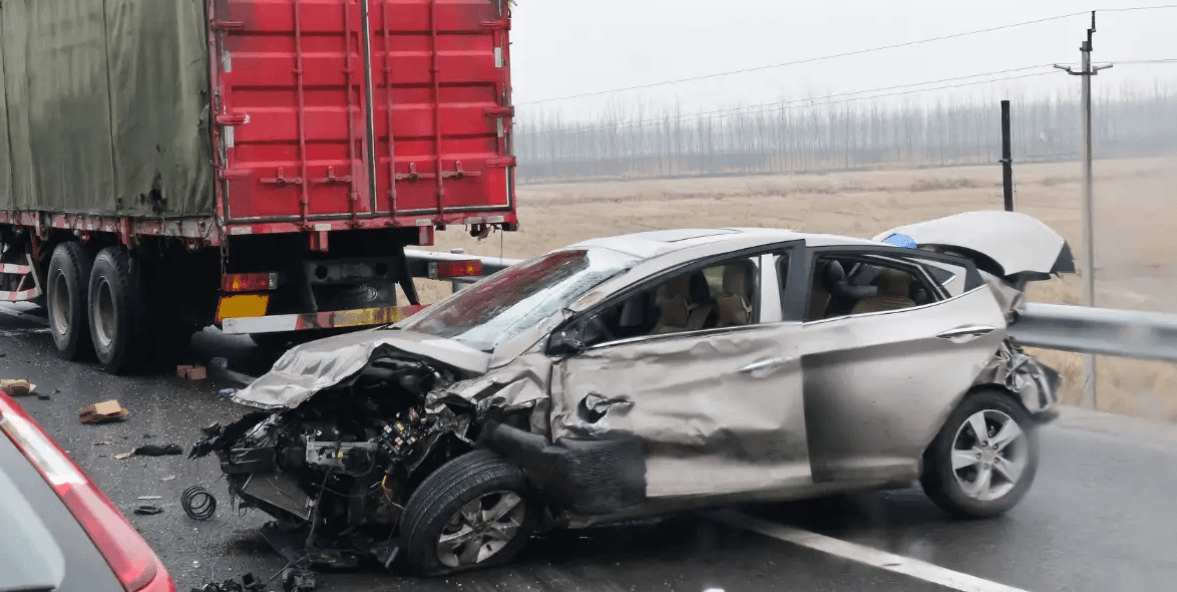
Every year, approximately 1.19 million people are killed on the world’s roads. Between 20 and 50 million more suffer non-fatal injuries, many of which result in permanent disability.
Road traffic crashes are the leading cause of death for children and young adults between the ages of 5 and 29. These are not random tragedies. A large share of them are the direct result of roads that were designed, built, or maintained without adequate attention to safety engineering.
Road crashes cost most countries around 3% of their gross domestic product annually. In low and middle-income countries, that figure reaches 5% or higher.
The global macroeconomic burden of road injuries was estimated at $1.8 trillion between 2015 and 2030 alone. Behind every one of those numbers is a road, an intersection, a highway, or a crossing that either received proper engineering attention or did not.
So let us tell you more about road safety engineering, and what consistently happens when it gets ignored.
What Road Safety Engineering Is
Road safety engineering is the discipline of designing, building, auditing, and improving roads in ways that reduce the likelihood and severity of crashes. It applies engineering principles to the physical environment, road geometry, surface materials, lane width, intersection layout, lighting, signage, barriers, drainage, and pedestrian infrastructure with the explicit goal of making roads forgiving of human error.
The core assumption behind road safety engineering is straightforward. Humans make mistakes. Drivers misjudge speed, miss signs, lose focus, and react too slowly. Road safety engineering accepts this reality and designs the physical environment to reduce the consequences when those mistakes happen.
A road designed with this principle in mind uses clear sight lines, appropriate curve radii, well-marked lane separations, energy-absorbing barriers, adequate lighting, and safe pedestrian crossings. A road built without it simply places vehicles and people on a path and hopes for the best.
Road safety engineering also includes the systematic analysis of crash data to identify high-risk locations commonly called black spots and implement targeted improvements. It covers road safety audits, which are formal evaluations of road design at various stages of a project to identify safety problems before a road opens to traffic. It covers speed management through physical design rather than just signage. The discipline is both proactive and reactive, addressing risk before crashes happen and fixing conditions after patterns emerge.
What Happens When Road Safety Engineering is Ignored
When road safety engineering work is done properly, roads become measurably safer over time. When it is skipped, underfunded, or ignored, the consequences follow a predictable pattern.
Higher Death Rates on Rural and Poorly Lit Roads
One of the most consistent findings in road safety data is the relationship between road design quality and crash severity. Rural roads, which typically receive less engineering investment than urban highways, account for a disproportionate share of fatalities.
Across countries with available data, an average of 53% of all road deaths occur on rural roads despite rural roads carrying significantly less traffic volume than urban networks.
The design factors are direct contributors. Rural roads often have narrow lanes, limited sight distances around bends, inadequate shoulder widths, soft verges that cause vehicles to lose control when a driver corrects even slightly, and insufficient delineation at night.
When a driver makes an error on a well-engineered road, safety features absorb some of the consequences. When a driver makes the same error on a poorly engineered road, there is nothing to catch the mistake.
Nighttime conditions compound the problem significantly. Pedestrian fatalities in the most countries have risen by more than 80% since reaching a historic low in 2009, and almost the entire increase has occurred on urban arterial roads after dark.
Research consistently links this to roads that lack adequate lighting, continuous sidewalks, marked crosswalks, and safe crossing infrastructure. These are engineering failures. The roads were built to move vehicle traffic efficiently. They were not built to keep pedestrians alive.
Preventable Deaths at Dangerous Intersections
Intersections are among the highest-risk points on any road network, and their design has a direct and measurable impact on collision rates. An intersection designed with proper sight triangles, appropriate turn radii, clear signal phasing, and pedestrian refuge islands performs very differently from one designed purely for traffic throughput.
When intersection design ignores safety engineering principles, the results are predictable. Conflicting traffic movements create high-speed right-angle crashes. Inadequate sight distances mean drivers cannot see approaching vehicles in time to stop.
Missing pedestrian signals or crosswalk markings force pedestrians to navigate moving traffic without protection. These are not freak occurrences. They are the expected outcomes of engineering decisions that prioritized capacity over safety.
Black spot analysis is a core tool in road safety engineering that exists precisely because dangerous locations repeat themselves. The same intersections, the same road sections, the same ramps produce crash after crash until someone applies engineering intervention.
When that analysis is not performed, or its findings are not acted on, the crashes continue. The locations are known. The fixes are technically feasible. The failure to apply them is a policy and investment failure, not an engineering mystery.
Vulnerable Road Users Pay the Highest Price
More than half of all road traffic deaths globally occur among vulnerable road users, pedestrians, cyclists, and motorcyclists. These are the people with the least physical protection and the most exposure to the consequences of poor road design. They are also the people most directly affected when road safety engineering is absent from planning decisions.
Roads designed without pedestrian infrastructure force people to walk on carriageways. Roads without separated cycling facilities place cyclists in the path of fast-moving vehicles. Roads without traffic calming in residential areas expose children and elderly residents to high-speed traffic on streets they use daily.
The data on pedestrian risk is stark. Studies in the US have found that pedestrian fatalities cluster on urban arterial roads that were built to move high volumes of traffic between metropolitan areas without safe crossing infrastructure.
Many of the worst locations lack any marked crosswalk within several hundred meters. The pedestrians killed at these locations were not behaving recklessly. They were crossing roads that were engineered for vehicles and not for them.
Research also consistently shows that the burden falls hardest on socially and economically disadvantaged communities. Neighborhoods with lower incomes tend to have older, less-maintained road infrastructure, less pedestrian investment, and worse lighting.
Residents of these areas are more likely to walk to public transport and less likely to have access to safe walking routes. This is a direct consequence of unequal investment in road safety engineering across different communities.
The Economic Damage That Follows
Road crashes are not only a human tragedy. They are an economic drain that affects entire countries. The direct costs include emergency medical response, hospital treatment, rehabilitation, vehicle damage, and property damage. The indirect costs include lost productivity, lost income, long-term disability support, and the economic impact on households that lose a working member.
Motor vehicle crashes cost millions per year. Road crashes cost most countries between 2% and 5% of GDP annually, with some low and middle-income countries losing up to 9% of GDP in crash-related costs. These figures consistently exceed the foreign aid received by many of those same countries. The economic loss from road crashes in the developing world often surpasses the total development assistance flowing into those economies.
The return on investment in road safety engineering is well established. Targeted engineering interventions at high-risk locations, which include installing median barriers, improving sight lines, adding pedestrian crossings, and upgrading road lighting, consistently reduce crash rates at treated locations.
Every investment in road safety engineering saves multiples in avoided crash costs. When that investment does not happen, the costs simply shift to healthcare systems, families, and national economies.
Structural and Long-Term Infrastructure Failure
Road safety engineering is not a one-time exercise. Roads deteriorate. Surfaces crack and lose friction. Markings fade. Lighting fails. Drainage systems block and create standing water on carriageways. Vegetation grows and blocks sight lines. A road that was reasonably safe when it opened becomes progressively more dangerous if maintenance and safety monitoring are neglected.
Regular road safety audits and condition assessments are the engineering tools that catch these deteriorating conditions before they produce casualties. When audit programs are underfunded or not conducted at all, problems accumulate invisibly.
A faded centerline on a rural road does not look dangerous until a driver drifts across it at night. A blocked drain does not seem urgent until a wet road surface causes a vehicle to aquaplane into oncoming traffic.
Infrastructure neglect is also cumulative and expensive to reverse. A road that receives consistent maintenance stays in a serviceable condition at moderate cost. A road that is allowed to deteriorate to a poor condition requires far greater investment to restore, and carries a higher crash risk throughout the period of neglect. The economics strongly favor preventive road safety engineering. The human cost of not applying it is even clearer.
What the Data Says About Countries That Invest
The relationship between road safety engineering investment and crash outcomes is not theoretical. Countries that have made sustained, systematic investments in road safety engineering have achieved substantial reductions in road deaths over time.
The UN set a target of halving global road deaths and serious injuries by 2030. Progress across high-income countries with strong road safety engineering programs has been real. Road deaths in IRTAD countries fell by an average of 1.9% in 2024, with the sharpest reductions among children (8.7%) and teenagers aged 15 to 17 (9%). These reductions reflect decades of engineering investment: safer road designs, barrier improvements, junction redesigns, pedestrian infrastructure upgrades, and systematic black spot treatment programs.
Most countries, however, are not on track to meet the 2030 target. The countries furthest from the target are predominantly low and middle income, where road safety engineering investment has been lowest and where 92% of the world’s road fatalities now occur, despite those countries having only around 60% of the world’s vehicles.
That gap is not explained by driving behavior alone. It is explained by the quality of the roads those drivers use.
See also: Why Choosing the Right General Contractor Is the Most
Final Words
Road safety engineering is not a luxury item in infrastructure planning. It is the technical practice that determines whether roads kill people or protect them. When it is applied with sufficient investment and rigor, death rates fall. When it is deprioritized, underfunded, or ignored entirely, the outcome is entirely predictable: more deaths, more injuries, more economic damage, and more families absorbing consequences that could have been prevented by design.
The 1.19 million people who die on roads every year do not all die because of reckless behavior or bad luck. A significant share of them die because someone, somewhere in the planning and engineering process, did not treat road safety as a priority. The infrastructure that should have protected them was either never built, never maintained, or never assessed for the risks it carried.
Road safety engineering exists to close that gap. Every country, every city, and every road authority that takes it seriously saves lives. Every one that ignores it pays for that decision in human cost, in economic loss, and in crashes that happen again and again at locations that were always preventable.