Every property with trees eventually collects a pile of branches, whether from storm damage, pruning, or land clearing. Burning them is often restricted, hauling them away costs time, and leaving them invites pests. A firewood branch logger offers another route by cutting limbs into short pieces that can dry and burn in a stove. The way it differs from the machines people usually compare it with explains where it fits.
Three Machines, Three Different Outputs
A wood chipper turns branches into small chips, which suit mulch and trails but not a woodstove. A firewood processor cuts and splits large logs into stove-ready pieces, and it is built for heavy, straight timber. A branch logger sits between the two. It chops limbs and brush into short lengths, here averaging 3 to 8 inches, but it does not split them and it is not made for large trunks.
Each machine does part of the job, and the branch logger does the cutting step quickly for the awkward, small material that the others handle poorly. A person with a hand saw and a pile of brush can see the difference within an afternoon.
How the Blades and Feed Work
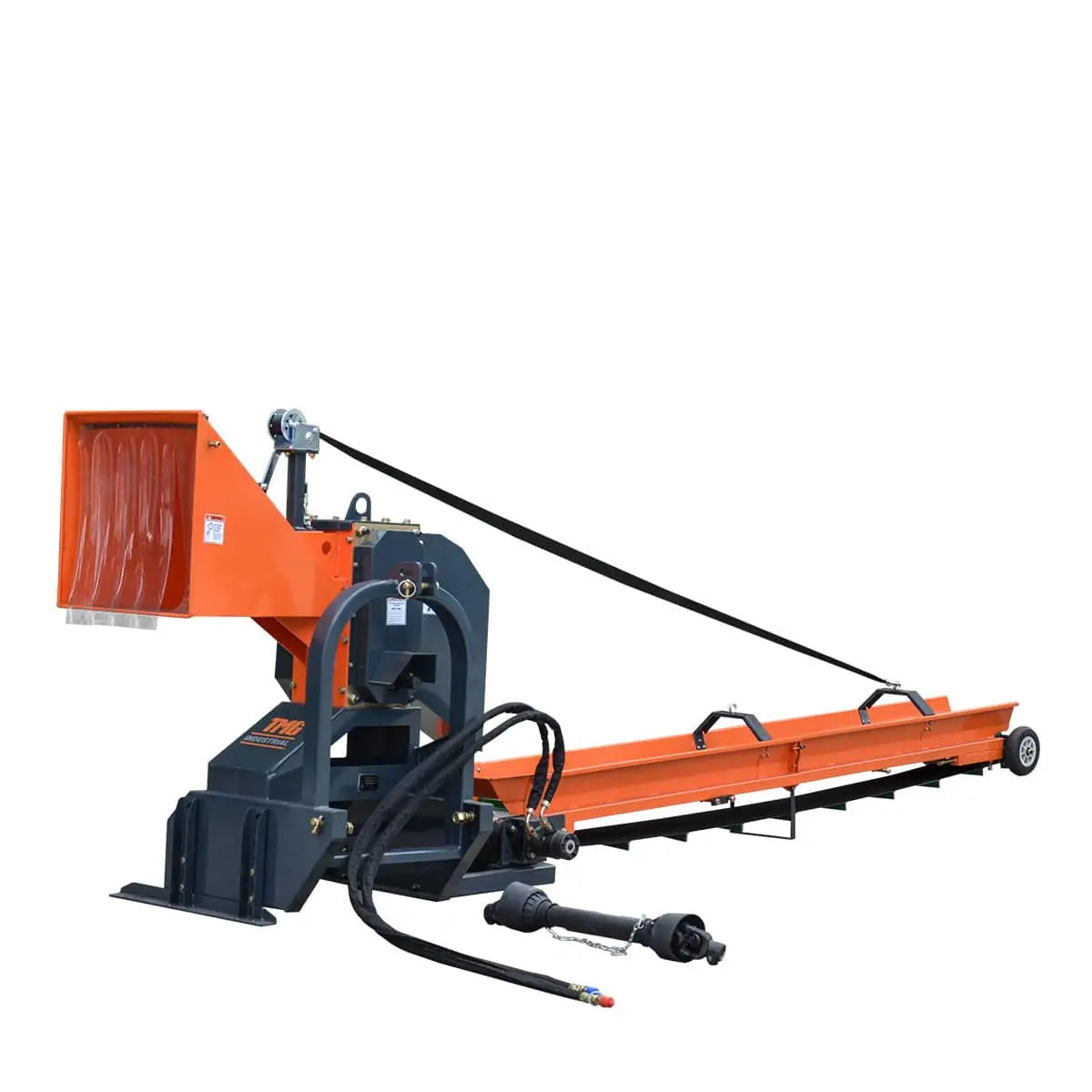
Six steel alloy blades chop through the wood, and they can be resharpened when they dull. The blades are designed to grab onto branches as they are fed, which reduces the effort needed from the operator. A kitchen paper shredder offers a fair picture: the material is pulled in by the cutting action rather than pushed, so the person guides the material rather than forcing it. The maximum log diameter is 110 millimeters, so thicker limbs still need a chainsaw first.
Power and Tractor Fit
The machine is driven by the tractor’s power take-off, the rotating shaft at the back of the tractor that carries engine power to attachments. It mounts on a three-point hitch in Category 1 or Category 2 sizes and is intended for tractors from 20 horsepower upward. A telescopic driveshaft is included. The unit weighs about 750 pounds in operation, so the hitch and tractor must be in good condition.
The Conveyor Keeps the Work Clean
A folding belt conveyor carries finished pieces into a trailer, a bag, or a pile, which keeps the area tidy and reduces handling. The conveyor is driven by a hydraulic motor and can be angled up to 45 degrees, then folded vertically for transport and storage. Placing a trailer under the end of the belt means the pieces move from brush to firewood without being touched.
Visit this Site: Why Texas Eminent Domain Attorneys Are an Invaluable Resource for Landowners
Keeping Hands and Bystanders Safe
Chopping machines deserve respect, and pieces thrown from a chopping action can be hazardous, so a stable footing and clear surroundings are part of the plan. A few habits matter every time the machine runs:
- Wear eye, ear, and hand protection
- Keep clothing away from the feed area
- Stop the power take-off before clearing jams
- Keep bystanders well back
Why This Approach Appeals
Firewood prices and storm cleanup keep many Canadian landowners looking for ways to use what they already have. Turning branches into stove-ready lengths gives them a second use before winter. TMG Industrial offers the TMG-TFL42 for tractor owners who want to cut branches into firewood-sized pieces.