Wall-mounted lighting can do much more than fill an empty section of wall. Depending on the fixture, it can provide focused light for reading, soften the atmosphere in a bedroom, highlight artwork, brighten a hallway, or create another layer of illumination in a living room.
Two common options are wall spotlights and wall sconces. They may both attach to the wall, but they usually perform very different jobs. Spotlights are designed to direct light toward a specific area, while sconces often spread or diffuse light more broadly and play a stronger decorative role.
Understanding that difference can make it easier to choose the right fixture for each part of the home instead of expecting one style of wall light to work everywhere.
Wall spotlights provide focused illumination, while decorative sconces can introduce softer ambient light and visual interest.
What Is a Wall Spotlight?
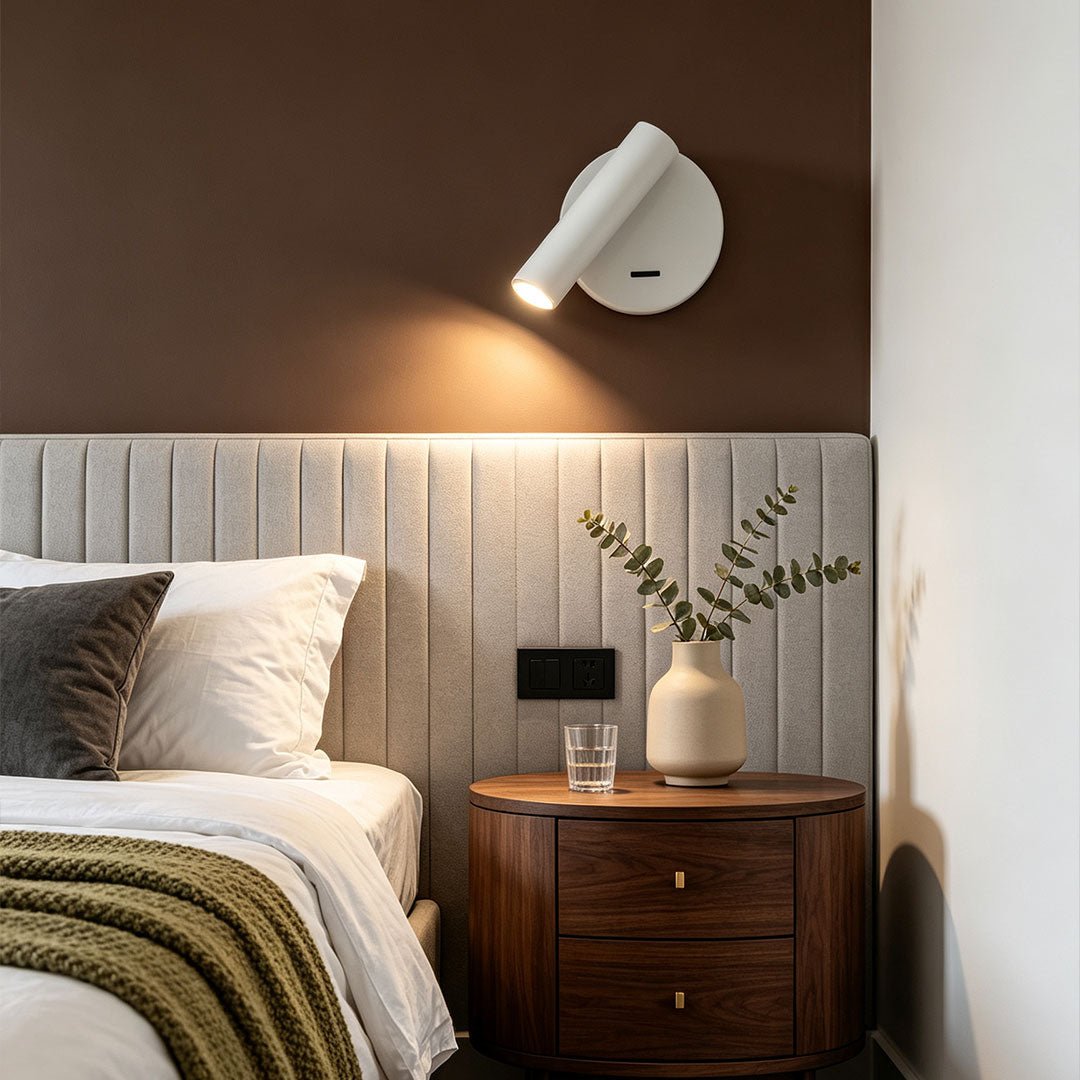
A wall spotlight is designed to send light in a more controlled direction. Many designs include an adjustable head that can be tilted or rotated, allowing the beam to point toward a reading area, desk, artwork, shelf, or another specific feature.
This makes spotlights particularly useful when the purpose of the fixture is clear and practical.
For example, a spotlight beside a bed can provide concentrated reading light without illuminating the entire bedroom. A small directional fixture above shelving can emphasize books or decorative objects, while a spotlight aimed at artwork can make the piece more noticeable after dark.
Homeowners comparing different Wall Spotlights should pay attention to adjustability, beam direction, fixture projection, mounting position, and whether the light source will be visible from normal seating or standing positions.
What Is a Wall Sconce?
Wall sconces cover a much broader range of decorative wall-mounted fixtures.
Some send light upward or downward, while others use fabric, glass, stone, metal, or diffusers to create a softer glow. Certain sconces are mainly decorative, while others provide enough illumination to contribute significantly to the general lighting of a room.
Because their shapes and materials vary so widely, sconces can become part of the room’s visual design even during the day.
Different Wall Sconces can work in bedrooms, living rooms, hallways, dining rooms, bathrooms, entryways, and other spaces where homeowners want to introduce light without using additional floor or table space.
Choose Spotlights for Reading Areas
Reading is one of the strongest applications for a directional wall light.
A general ceiling fixture may make the room bright, but it does not necessarily put enough useful light on the page. A spotlight positioned close to the bed, chair, or desk can direct illumination precisely where it is needed.
Adjustability becomes particularly useful when several people use the space differently. The beam can be aimed toward a book during reading and redirected toward the wall when softer background illumination is preferred.
Mounting height should be tested from the position in which the fixture will actually be used. A spotlight that looks correctly placed while standing may sit too high or create glare when someone is seated.
Use Sconces When Atmosphere Matters More
If the goal is to make a room feel warmer rather than illuminate one specific task, a wall sconce may be the better choice.
Sconces can cast light across a wall, through a diffuser, or toward both the ceiling and floor. This helps create a softer layer between ceiling fixtures and lamps positioned lower in the room.
In living rooms, this extra layer can reduce the need to keep the main ceiling light operating at full brightness. In bedrooms, sconces can create a calmer evening environment, particularly when used with warm light and compatible dimming controls.
The fixture itself can also contribute texture and decoration through glass, fabric, metal, or sculptural forms.
Highlight Artwork With Controlled Light
Artwork and wall displays often benefit from more focused illumination than general sconces provide.
A small adjustable spotlight can direct attention toward a painting, photograph, shelf, or sculptural object without making the entire wall equally bright.
The angle should be tested carefully to avoid distracting reflections, particularly on glass-covered artwork.
Several smaller spotlights can also work across a gallery wall, but restraint is important. If every object receives an equally strong beam, the display may begin to feel more like a showroom than a residential interior.
Use Sconces to Frame Mirrors and Furniture
Wall sconces are particularly effective when used as part of a symmetrical composition.
A pair can frame a mirror, fireplace, headboard, console table, or piece of artwork. This creates visual balance and can help a large wall feel more intentional.
Spacing matters. Fixtures positioned too close to the central object can make the composition feel crowded, while sconces placed too far away may appear disconnected.
It can help to mark the fixture dimensions on the wall with painter’s tape before installation to see how the complete arrangement looks from across the room.
Think About Beam Direction
The way a fixture distributes light may matter more than the shape of the fixture itself.
A spotlight creates a concentrated beam and is designed to emphasize one area. A traditional sconce may spread light in several directions, while an up-and-down sconce can create decorative vertical patterns across the wall.
Consider what the light will actually hit.
If the fixture sits beside a textured stone wall, directional light may reveal the material dramatically. If it is beside a bed, a concentrated beam may be useful for reading. If it is installed along a hallway, softer diffusion may create a more comfortable transition between rooms.
Avoid Glare at Eye Level
Wall fixtures are often mounted relatively close to normal eye level, so glare deserves careful attention.
A spotlight pointed toward a person instead of their task area can quickly become uncomfortable. Likewise, a decorative sconce with a visible bright bulb may look attractive from across the room but feel harsh when someone walks past it.
Check the fixture from seated and standing positions before finalizing its angle or height.
Diffusers, shades, frosted glass, deeper fixture bodies, and controlled beam angles can all reduce direct visibility of the brightest part of the source.
Use Wall Lighting to Save Floor and Table Space
One practical advantage shared by both spotlights and sconces is that they do not occupy furniture or floor space.
This makes them useful in compact bedrooms, narrow hallways, reading corners, and smaller living areas.
Replacing bedside lamps with wall-mounted fixtures can free up nightstands. A directional wall light beside a small desk can preserve working surface, while sconces along a hallway can add illumination without introducing floor lamps into the circulation route.
This does not physically make the room larger, but reducing visible clutter can help a small interior feel more organized.
Combine Both Types in the Same Room
There is no need to choose only spotlights or only sconces for an entire home.
They can perform complementary roles in the same room.
A bedroom might use adjustable wall spotlights beside the bed for reading and decorative sconces on another wall for softer ambient illumination. A living room could use a spotlight above artwork while a pair of sconces provides warmth around the fireplace or sofa.
The fixtures do not need to match exactly. Similar finishes, materials, or color temperatures can help different designs feel connected.
Keep Color Temperature Consistent
When several wall lights are visible together, the color of the light should feel reasonably coordinated.
Warm light often works well in bedrooms, living rooms, hallways, and dining areas because it creates a softer residential atmosphere.
Whatever color temperature is selected, avoid dramatic differences between fixtures in the same visual area unless the contrast is deliberate.
A warm decorative sconce beside a very cool reading spotlight may make the room feel less cohesive even if both fixtures are attractive individually.
Final Thoughts
Wall spotlights and wall sconces may occupy similar positions, but they solve different lighting problems.
Choose a spotlight when you need to direct light toward a task, artwork, shelf, or specific surface. Choose a sconce when the goal is softer ambient illumination, decorative impact, or another layer of light around the room.
In many homes, the strongest solution is to use both. Directional fixtures can handle focused tasks while decorative sconces improve atmosphere and visual balance.
When purpose, beam direction, mounting height, glare, and room style are considered together, wall lighting becomes much more than a way to fill empty wall space. It becomes a practical tool for making each part of the home work and feel better after dark.